Guides
The best pet grooming equipment brands, judged on use
The best pet grooming equipment brands are judged here on parts supply, repair and load, with the checks that separate a working tool from a showroom one.
What to take away
- The best pet grooming equipment brands, judged on use, come down to parts supply and local repair.
- Andis, Oster, Wahl, Aesculap and Laube are the clipper brands most salons can get serviced, and each suits a different coat and hand.
- MetroVac, Double K, B-Air and K-9 II split the dryer market by airflow, noise and how much heat they put on a dog.
- Chris Christensen, Les Poochs, Artero and Safari cover brushes and combs from fine work to bulk deshedding.
- Test at the load the item will work at, and keep the sheets so the next purchase is a comparison.
The clipper brands, and who each suits
Andis builds the AGC and UltraEdge lines, the clippers most American salons keep as a first machine. They run cool, take standard detachable blades, and every sharpening service stocks the parts. A new AGC typically sells for $150 to $200. Suits high-volume pet trims on smooth and double coats. Sold outright, no subscription.
Oster makes the A6 and the classic 76. The A6 is heavier and slower than an Andis but survives drops and long days. It typically costs $200 to $260. Suits a busy shop that wants one machine to last. Sold outright.
Wahl sells the KM10 and the cordless Arco. The KM10 is the quietest of the mainstream clippers, which matters on nervous dogs and cats. It typically runs $180 to $220. Suits mobile groomers and anyone working close to an animal's head. Sold outright.
Aesculap is the German line, the Durati and the Fav5. Higher price, tighter tolerances, and blades that hold an edge longer. Expect $300 to $500, imported, so check parts lead time before buying. Suits show trims and fine work on curly coats. Sold outright.
Laube builds the Lazor and the Speed Feed. These are the fastest-cutting clippers on the market and the ones most likely to nick a dog in an unskilled hand. They typically sell for $400 to $600. Suits experienced groomers doing large double-coated breeds. Sold outright.
The dryer brands, and what each does to a room
MetroVac makes the Air Force range, the steel canister dryers most salons recognize. Variable speed, strong airflow, and a noise level that carries through a wall. Typically $250 to $400. Suits a fixed salon with a separate drying area.
Double K builds the ChallengAir and the Airmax. Quieter than a MetroVac at the same airflow, and the two-motor models run cooler on long coats. Typically $300 to $450. Suits salons drying several dogs at once.
B-Air makes the Bear Power and the smaller FP series. Cheaper, lighter, and the one most mobile groomers bolt into a van. Typically $150 to $250. Suits a single-station setup.
K-9 II is the stand dryer line, the ones on a boom arm. They free both hands and run at lower heat than a canister. Typically $300 to $500. Suits finish work on curly and drop coats.
Brushes, combs and blades
Chris Christensen makes the Big G slicker and the Buttercomb line. The slicker is the one most show groomers reach for on a finished coat. Typically $40 to $70. Suits fine work and curly coats.
Les Poochs makes the LV and the pink-handled slickers, priced high and built to last. Typically $60 to $100. Suits anyone doing daily maintenance on a long coat.
Artero covers the middle of the market, slickers, rakes and deshedding tools at a working price. Typically $20 to $40. Suits a high-volume shop that replaces brushes often.
Safari is the pet-store line, cheap and widely stocked. Typically $10 to $25. Suits a new salon building a first kit, not a finished coat.
Blades are their own decision. A #10 is the standard for sanitary work and pads, a #7F for short body work, a #4F for a clip-down on a matted coat. A single blade typically costs $20 to $40. Buy the blade that matches the coat in front of you, not the one in the catalog.
Why parts supply outranks features
An item that stops the room costs you the appointments it stops, not the price of the repair. That is why the parts question gets asked in writing.
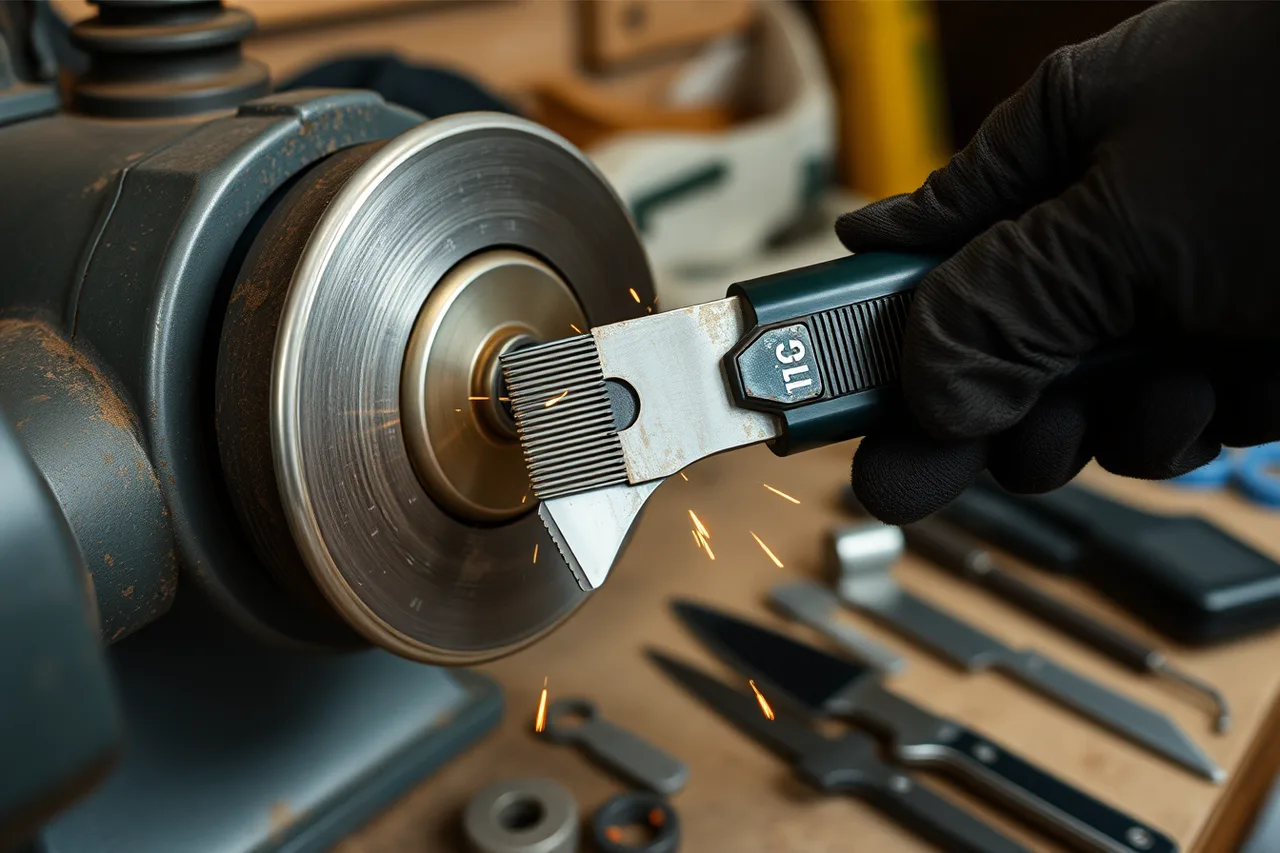
Blades and shears need sharpening rather than replacing. A manufacturer whose blades your local sharpener will not take has a running cost higher than the price list suggests. Ask the sharpener before you ask the seller.
On a second-hand machine, run the inspection sequence in the new versus used equipment cost guide first.
The checks to run before you buy
Score each candidate the same way. Do not skip a check because the brand is well regarded.
- Hold it in the working position for as long as one groom takes, and note where the wrist complains first.
- Run it under real load, on a coat, not idling on a bench.
- Measure heat at the point that touches an animal, at the end of the run rather than the start.
- Listen at the height a dog's head sits, not at your own.
- Change the blade or filter wearing what you would actually be wearing.
- Ask the supplier, in writing, what wears first and how long parts stay available.
Scoring, so two candidates can be compared
| Check | What a good result looks like |
|---|---|
| Comfort under sustained use | No complaint from hand or wrist at the end of a groom |
| Performance under load | Steady, no fade as it warms |
| Heat at the contact point | Comfortable at the end of a full run |
| Noise at the animal's head | Tolerable without raising your voice |
| Parts availability, in writing | A stated period, not a reassurance |
| Local repair | A named person you have spoken to |
Weight the last two heavily. A salon rarely regrets an item that performs adequately and is repaired next week.
Keeping the sheets
File every completed test sheet with the equipment records. Two purchases later they are the only way to compare candidates you tried months apart.
The Occupational Safety and Health Administration guidance on safety programs for small employers places heat, noise and electrical checks in a written procedure.
Keep purchase and service records alongside, as the Internal Revenue Service note on what records a business keeps describes. The Bureau of Labor Statistics profile of animal care and service workers describes the work this equipment supports.
Which stations to buy for is set out in the equipment checklist for new owners, and the reasoning behind them in the equipment and setup guide. Whether local demand supports the specialism is handled in the best markets analysis. Capacity growth is covered in the expansion and market guide.
Common questions
Are trade shows a good place to run this test?
Partly. Holding the tool and asking the parts question are easy at a show. Running under load for a full groom is not, because nothing at a show works that long. Treat a show as a shortlist and finish the test at home.
What if a supplier will not answer the parts question in writing?
Treat the refusal as the answer and score it accordingly. A supplier who intends to stock parts has no reason to avoid saying so.
Should a salon standardize on one manufacturer?
Standardizing on blades usually pays, because it cuts the number of spares held. Standardizing on everything ties the whole room to one repair channel, which is the risk the parts question exists to measure.
Does a higher price predict a better result?
Not reliably, and the test exists because it does not. Price predicts finish and marketing more consistently than it predicts heat under load or a local repairer.