Guides
7 points worth checking on pet grooming equipment
Pet grooming equipment is chosen by station, not by shopping list: the tub, the drying positions and the table decide what every working day in the salon can hold.
What to take away
- Equipment is chosen station by station, because a station is what one dog occupies and what another dog waits for.
- Drying is the station that most often caps a salon, and it is the hardest one to add after the room is finished.
- Blades and clippers are maintained rather than owned; a salon without a blade routine is a salon that buys blades twice.
- Brushes, combs and shears are selected against coat family, not against price or brand loyalty.
- Table safety and the groomer's working height are equipment decisions with consequences that arrive slowly and stay.
A grooming room is a sequence of stations. Water in, coat clean, coat dry, coat finished, dog held safely until collection. Equipment either lets those run in parallel or forces them into single file. Almost every complaint a salon has about its own room traces back to that one property.
Start from the room, not from the catalog
Draw the room first. Mark the tub, each drying position, each table, and the holding area. Then walk a heavy double coated dog through the drawing and mark where a second dog would have to wait.
Room Layout Walkthrough
- Draw room and mark stations
- Walk heavy double coated dog through
- Mark where second dog waits
- Drawing sets the ceiling
- Three tables, one dryer = one table
Whatever the drawing says is your ceiling. Equipment bought to raise a ceiling that is set elsewhere is money spent on a station that was never the constraint. A salon with three tables and one drying position does not have three tables in any useful sense.
The wet end
The tub is a plumbing decision more than a purchase. What matters is water volume at a usable temperature, a hose long enough to reach the whole animal without the groomer stretching, drainage that clears hair rather than collecting it, and a surface the dog can stand on without slipping.
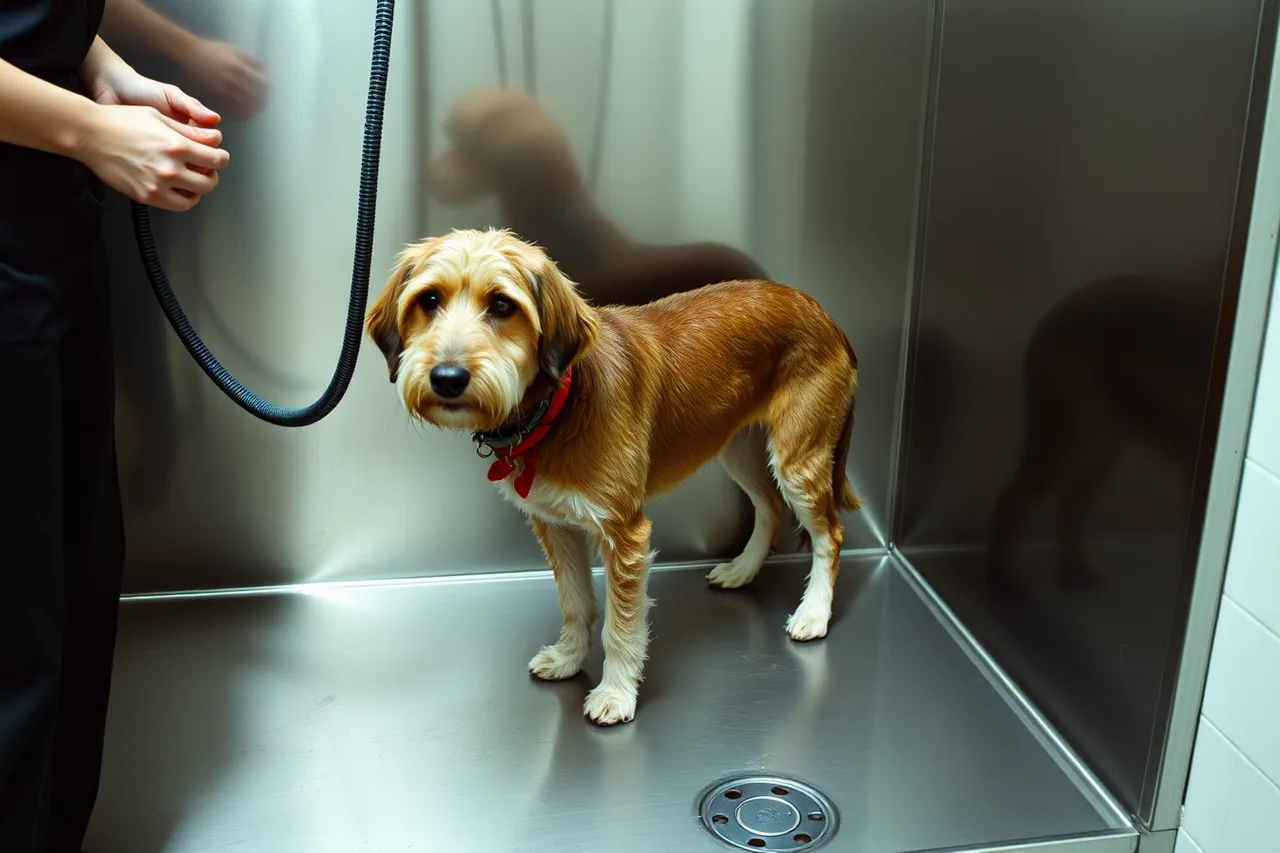
Recirculating bathing systems and water reclamation are worth considering where water use or discharge is constrained, but both interact with local rules. Trade waste, hair and product entering the drain, and any grease or solids trap requirement are set locally, so confirm what applies with your municipal authority before the plumbing is installed rather than after.
Entry and exit matter as much as the tub. A ramp or step a large or elderly dog can use without being lifted removes the single most common way a groomer gets hurt in the wet end.
The Occupational Safety and Health Administration's material on safety and health programs for small employers is a reasonable framework. Write that down as a procedure, not a habit.
Drying methods, and what each one asks of the room
Drying methods
What it does well
- High velocity forced air
- Moves water out of a dense coat quickly
- Stand dryer
- Frees the groomer's hands at the table
- Kennel or cage drying
- Dries several dogs while other work continues
- Towel and hand finishing
- Gentle, quiet, needs no power
What it demands
- High velocity forced air
- Noise management, technique, space around the dog
- Stand dryer
- A dedicated position and airflow
- Kennel or cage drying
- Constant supervision and strict heat control
- Towel and hand finishing
- Time, and a great deal of it
What it risks if unmanaged
- High velocity forced air
- Distress in a noise sensitive dog; hair everywhere
- Stand dryer
- Slow on a heavy undercoat
- Kennel or cage drying
- The failure mode salons write policies about
- Towel and hand finishing
- Coat left damp at the skin
Two rules apply whatever the method: a dog is never left unattended in a heated dryer. Every heat-applying dryer needs a written procedure covering who watches, how often, and what stops it.
Drying Methods Compared
High velocity forced air
- Does well
- Moves water fast
- Demands
- Noise control, space
- Risk if unmanaged
- Distress, hair everywhere
Stand dryer
- Does well
- Frees hands
- Demands
- Dedicated position
- Risk if unmanaged
- Slow on undercoat
Kennel or cage drying
- Does well
- Dries several dogs
- Demands
- Supervision, heat control
- Risk if unmanaged
- Policy failure mode
Towel and hand finishing
- Does well
- Gentle and quiet
- Demands
- Time
- Risk if unmanaged
- Damp at skin
Facility rules and insurers frequently set conditions here, and those vary by state and municipality. Confirm yours with your state authority and your insurer, not by copying another salon's policy.
The second rule is that dry means dry to the skin. A double coat that is dry on the surface and damp underneath produces a finish that will not hold and a callback that lands on your table for free.
Blades and clippers
Clippers are chosen for how they sit in the hand across a full day and how easily blades change on them. Blade selection follows a simple convention: a higher number leaves a shorter coat.
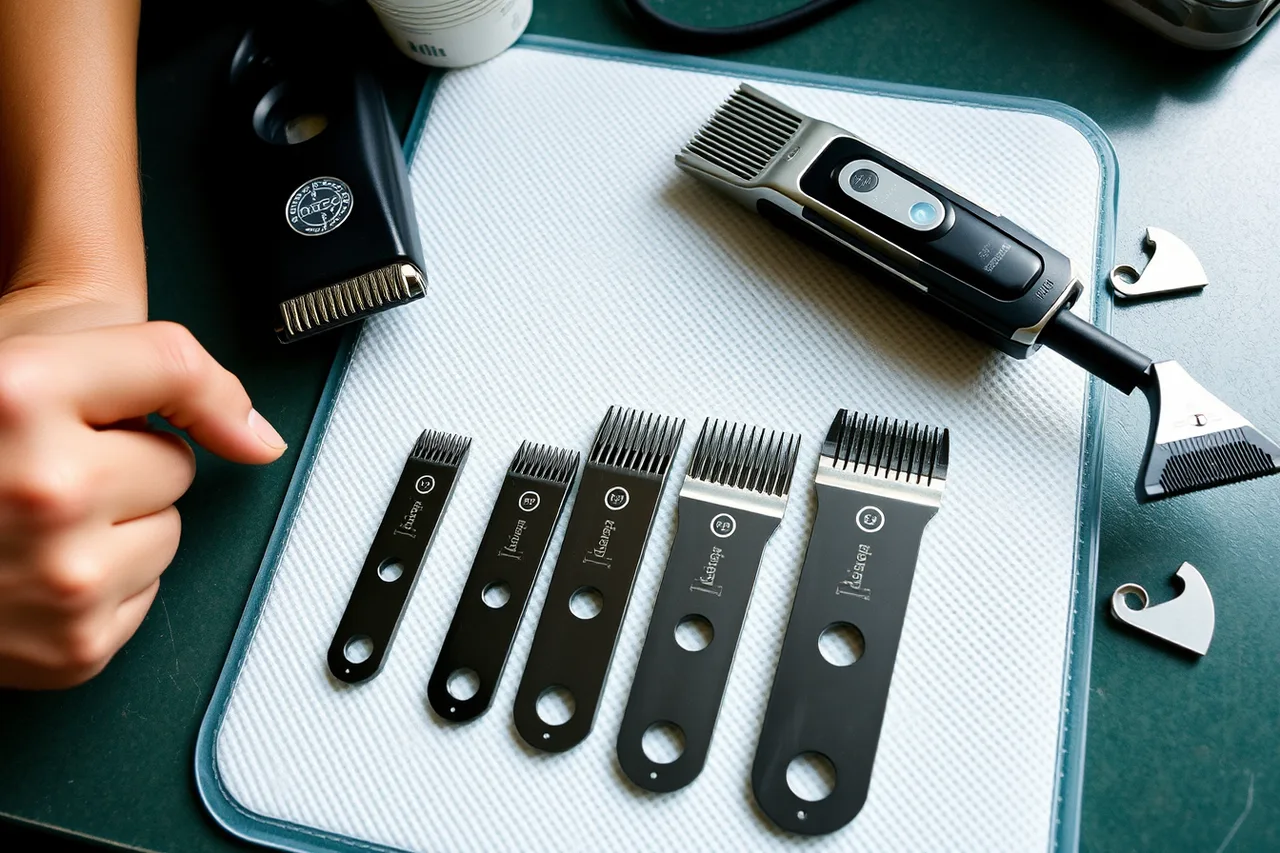
Lettered variants indicate different tooth spacing for finishing or skip tooth work. Learn the convention instead of memorizing a chart, because charts differ between manufacturers.
The routine matters more than the purchase.
- Keep more than one blade of the sizes you use most, so a hot blade can be set aside rather than pushed through the rest of the dog.
- Check blade temperature against your own skin regularly during a groom, and stop when it is uncomfortable rather than when it is alarming.
- Clean, oil and store blades after every use, and keep a sharpening cycle that is measured in work done rather than in weeks elapsed.
- Have a clean, heat safe place to put a blade down. Improvised surfaces are how blades get chipped and how benches get burned.
A blade that pulls is blunt or clogged. Telling a groomer to work faster with it produces exactly the outcome the salon does not want.
Brushes, combs and shears by coat family
Match the tool to the coat, not the price. Double coats need a slicker and an undercoat rake. Curly or wool coats need a slicker with line brushing and a comb to confirm work reached the base, not the surface.
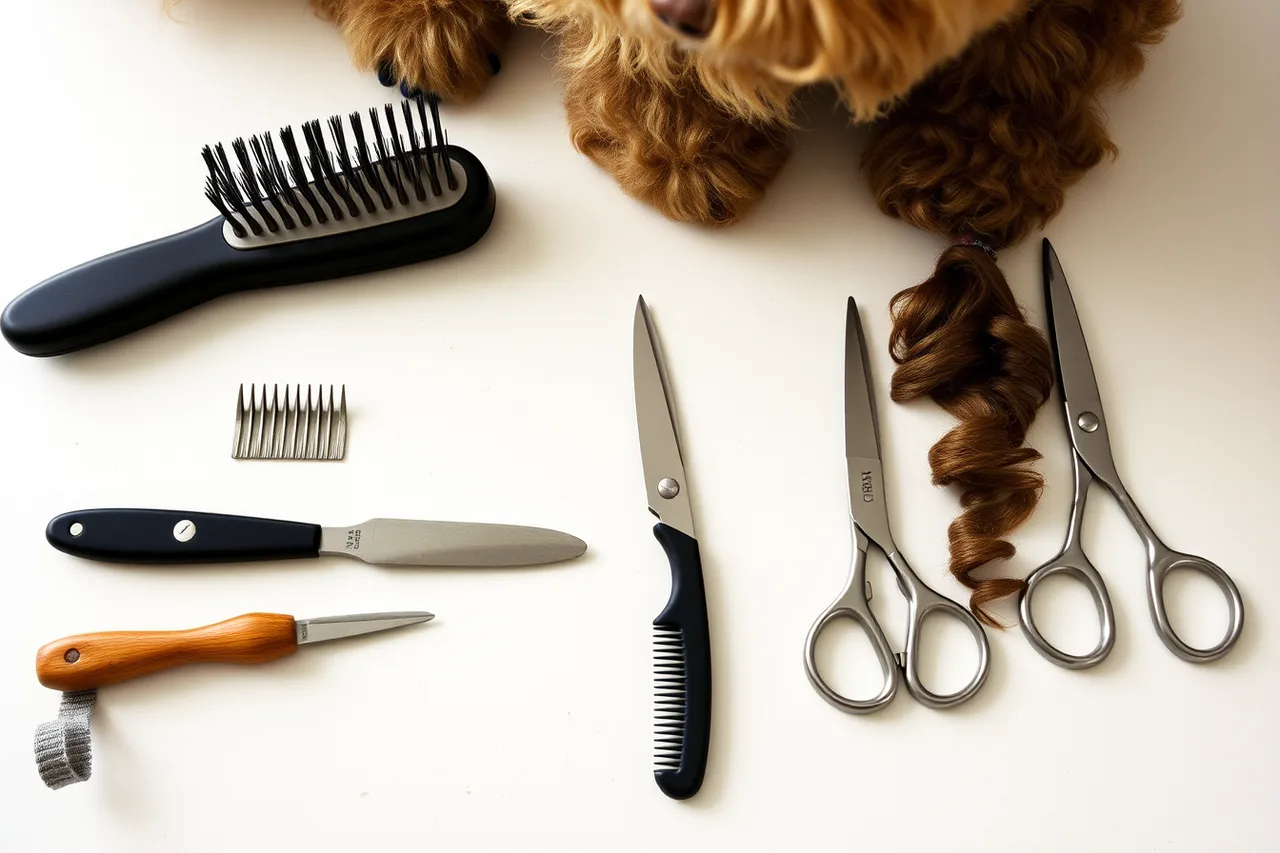
A wire coat is maintained with tools suited to texture work. A smooth coat needs a rubber or bristle tool and very little else.
Shears are personal and expensive, and they are the tools most often bought too early. A new salon needs a straight, a curved and a thinning shear that fit the groomer's hand, kept sharp, and nothing more until the menu demands it.
The comb is the quiet instrument that settles arguments. A comb that passes cleanly to the skin is the evidence that brushing is finished, and it is the check that keeps a coat family service honest. The services and packages guide sets out those families and what each is sold as.
Tables, restraint and the groomer's working height
A grooming table is a safety device. It needs a non slip surface, a stable base at the height the work is done, and a grooming arm with a restraint the dog cannot slip. A second attachment point is worth having on any table used with large dogs.
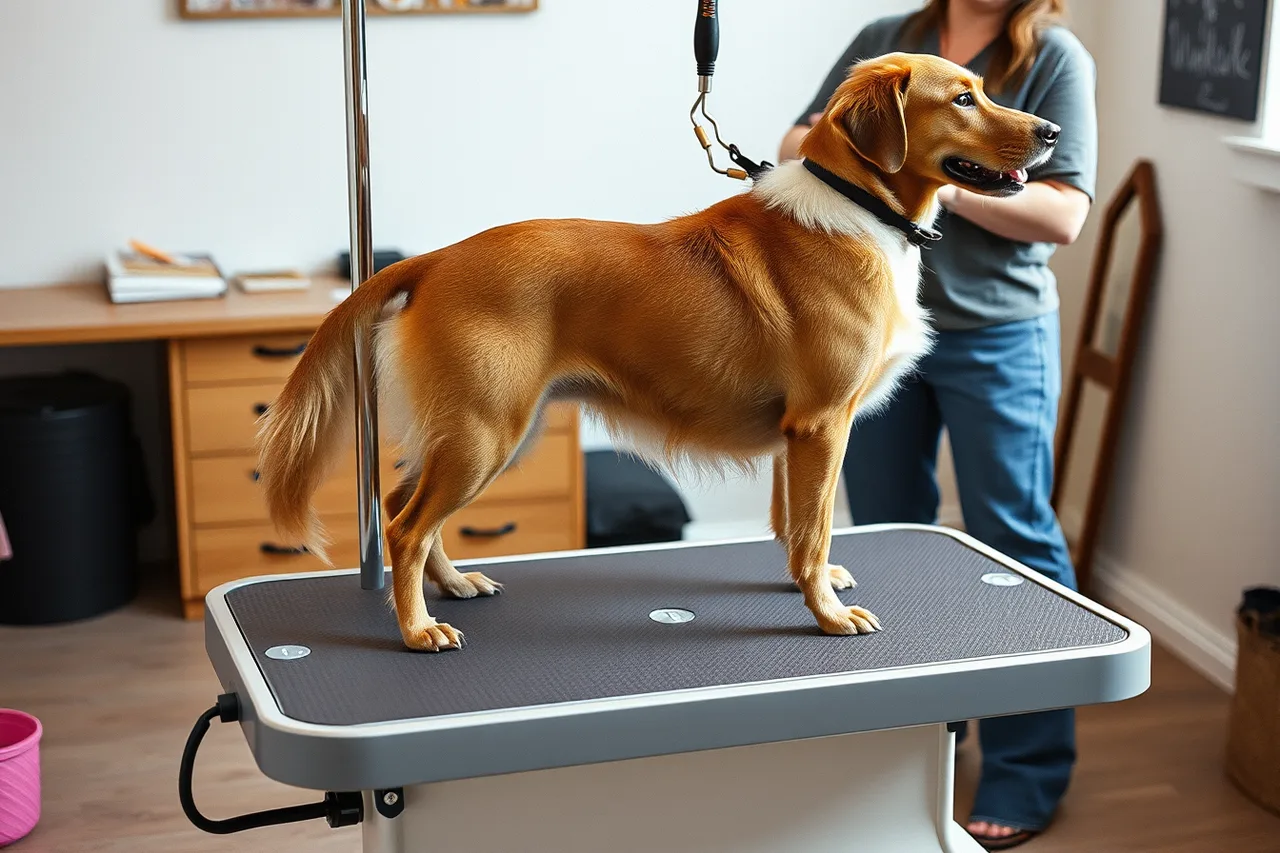
Height is not a comfort question. A table set too low is a back injury arriving over years, and an adjustable table is the cheapest insurance a salon buys. Electric and hydraulic tables earn their cost in the ability to lower for loading rather than lifting.
The rule that no table has an exception is that a dog on a table is never left alone, restrained or not. Write it down, train it, and check it, using the same safety program approach that covers the wet end.
Air, noise and the holding space
Hair, damp air and dryer noise are what a grooming room generates continuously. Three fittings answer them:
Air, noise and holding space
- Ventilation that clears moisture rather than moving it around
- Hair collection before the loose coat reaches the drains
- Separation between drying and the space where dogs wait
Holding space is equipment too. A finished dog waiting for collection occupies something, and if that something is a table then the table is not available. Kennel and holding arrangements may also be regulated separately from grooming itself in some jurisdictions, so confirm with your state and municipal authority what your holding arrangement counts as.
Keep purchase records, service records and warranty documents for everything above. The Internal Revenue Service note on which records a small business keeps covers the duty. The use is nearer to hand: a service history tells you whether a dryer is failing or simply old.
Broader planning context is in the startup and market guide. The Small Business Administration guide covers the structure the purchases sit inside, and the Bureau of Labor Statistics profile of animal care and service work describes the role the equipment is bought for.
Common questions
What should be bought first in an empty room?
Whatever makes water and drying work. A room with a good tub and enough drying positions can finish dogs on a borrowed table. A room with beautiful tables and one dryer cannot finish anything on a busy Saturday.
How many drying positions does a salon need?
Enough that the drying station is not the place dogs wait. Count it from your own booking pattern in the heaviest coat season rather than from an average week, because that is the week the number is tested.
Is professional equipment worth it for a home salon?
The wet end and the drying capacity are, because they set the ceiling. Hand tools can be built up over time, and shears in particular are better bought slowly and to fit the hand than quickly and to fill a case.
How is equipment maintenance scheduled?
By work done rather than by the calendar. Blades sharpen on a cycle driven by coats groomed; dryers are serviced on hours run. A salon that schedules by month will over service in a quiet period and under service in a busy one.