Guides
Groomer guide: Chicago salon compliance and records
A groomer guide to Chicago salon compliance: the city business license, state pet shop license, sanitation rules, and intake, rabies and bite records to keep.
This groomer guide walks through the licenses a Chicago pet grooming salon needs, the sanitation standards the health department inspects, and the intake, vaccination and bite records Animal Care and Control may ask to see.
What to take away
- Chicago Animal Care and Control handles animals; the Chicago Department of Public Health handles the building, the water and the waste.
- A grooming-only salon needs a Chicago business license and a zoning check on the address before the lease is signed.
- Every pet in your care needs an intake record and rabies proof, kept at least one year.
- Service dogs enter on the same terms as any customer, and no fee applies.
- Cleaning logs, bite reports and vaccination copies are what an inspector asks for first.
Who regulates animal care in Chicago
Two city departments split the work. Chicago Animal Care and Control enforces animal welfare, intake and holding rules under the animal care provisions of the Municipal Code of Chicago. The Chicago Department of Public Health inspects sanitation and issues health permits under Title 7 of the same code. Both can walk in.
At state level, the Illinois Department of Agriculture licenses pet shops under the Illinois Animal Welfare Act (225 ILCS 605). A salon that boards or sells animals may fall under that license; a grooming-only shop still answers to the two city departments.
The Illinois State Board of Veterinary Medicine draws the line between grooming and veterinary practice under the Veterinary Medicine and Surgery Practice Act of 2004 (225 ILCS 115). A groomer who treats a skin infection or drains an abscess has crossed it. Record what you see, refuse the procedure, and send the owner to a veterinarian.
Federal rules reach the shampoo shelf. The FDA animal and veterinary rules are run by the Center for Veterinary Medicine, which regulates animal drugs under the Federal Food, Drug, and Cosmetic Act, so read the label before you stock a medicated product. Service animals are covered by the ADA's Title III regulation at 28 CFR Part 36, and the service animal section is 28 CFR 36.302(c).
Chicago winter shapes the work as much as the code does. Road salt and dry indoor air drive demand for paw care and de-shedding, and the same grit wears tubs, mats and flooring. Replace before the cold months, not during them.
Permits a Chicago grooming salon needs before opening
Register the business structure with the Illinois Secretary of State, then get an Employer Identification Number from the IRS. The USAGov start a business guide lists the general steps.
Chicago issues the business license for your address through the Department of Business Affairs and Consumer Protection, under Title 4 of the Municipal Code of Chicago. Get the zoning check before signing a lease: the Chicago Zoning Ordinance (Municipal Code of Chicago, Title 17) gives animal handling its own use classification, and not every commercial storefront allows it.
A retail food license is separate, issued by the Department of Public Health after a plan review. It applies if you sell pet food or treats. If you sell or board animals, the pet shop license from the Illinois Department of Agriculture under the Animal Welfare Act (225 ILCS 605) is required.
Grooming-only salons often skip the state pet shop license, but confirm that with the state before you open. Mobile units need their own approvals and cannot operate under a storefront license, so confirm the license class with the Department of Business Affairs and Consumer Protection before you buy a van.
Licensure rules vary by state and municipality, and several states require no grooming license at all. Confirm with your state and municipal authority rather than relying on another city's model. For the fuller list, see licenses for a pet grooming business.
Sanitation standards and inspection frequency
Inspectors read three things: the cleaning schedule, the disinfectant, and how waste leaves the building. Surfaces that touch animals are cleaned between pets. Floors need a non-slip, non-porous finish that can be sanitized, and the standards they measure against are the sanitation rules in the Municipal Code of Chicago.
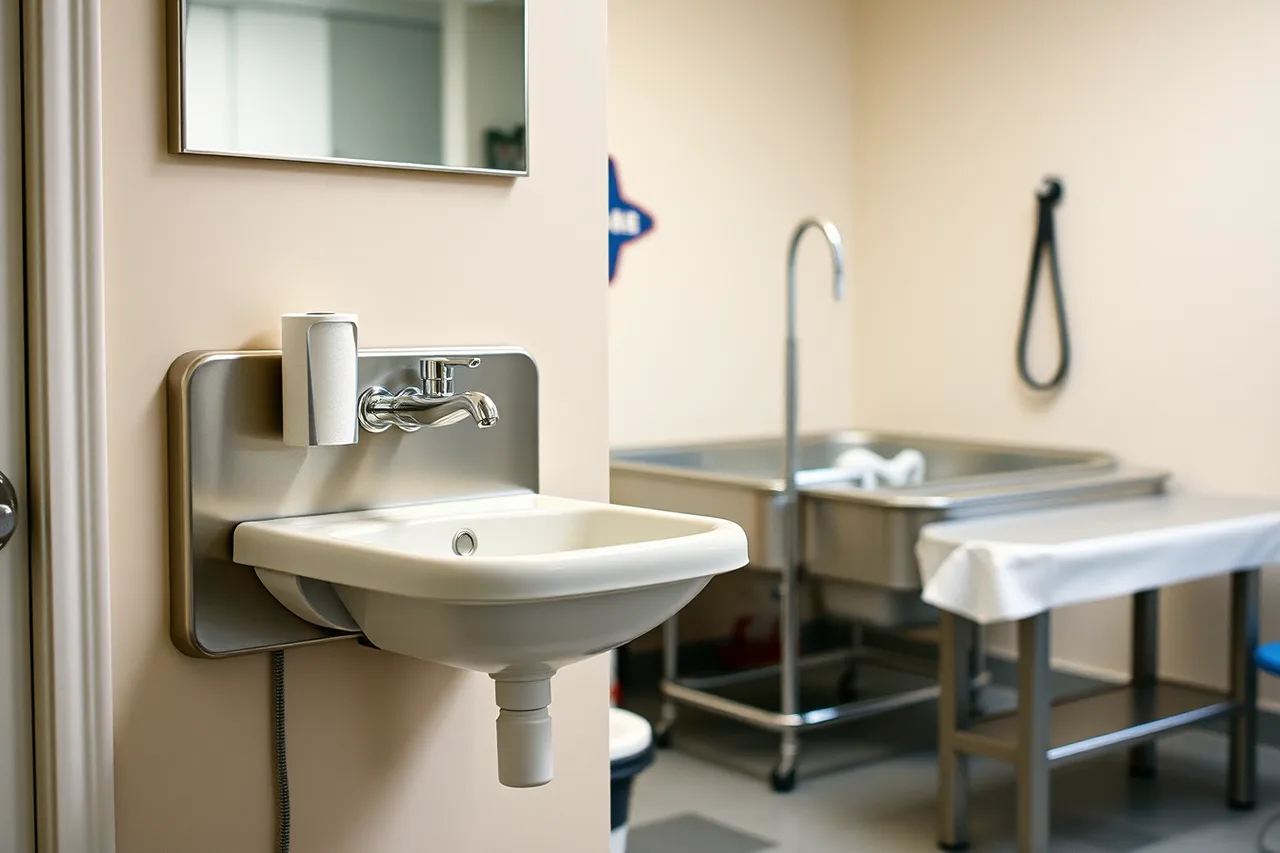
Water temperature, ventilation and cage drying areas get close attention, and so does the separation of clean and dirty towels. You need a hand washing sink that is not the tub you wash dogs in, covered waste bins, and a closed chemical store.
Winter adds minutes to every appointment. Salt residue and road grit need rinsing before a bath, and coats dry slower in cold, dry air. Build that time into the booking so sanitation does not slip when the day runs late.
Inspection frequency is set by permit type and complaint history, not by a published schedule. Most salons see at least one routine health department inspection a year, plus re-inspections after a violation. Animal Care and Control may visit after a customer complaint.
Our daily standards checklist covers the routines that keep you ready between visits. For a broader view of what inspectors expect, read our guide for new owners.
Intake, holding and record rules
Every animal in your care must be traceable to an owner. The intake form carries the pet's name, breed, owner contact, vaccination status and any medical notes. Keep it at least one year, the same bar city inspectors hold salons to, and longer if the pet stays with you.
Overnight holding needs a separate area with space, water and ventilation. Inspectors check those minimums during a complaint. A salon that never boards still needs intake records for every dog on the table.
Rabies vaccination proof is required for any dog or cat you handle. Illinois requires the vaccine under the Animal Control Act (510 ILCS 5) and the Rabies Control Act (510 ILCS 35), and Animal Care and Control can ask for proof during an investigation. Scan the certificate into the pet's file the day it arrives.
Keep a bite and injury log. A bite that breaks skin is reportable under the Illinois Rabies Control Act (510 ILCS 35), and in Chicago the report goes to Animal Care and Control. The log is your evidence that you reported it. Staff should know who to notify before an incident, not after.
Store paper records in a locked cabinet and digital copies in a backed-up folder. The Animal Welfare Act (225 ILCS 605) makes licensed animal businesses keep records, and a missing form during a city inspection is treated the same as a form you never collected.
Service animals are not pets under the ADA's Title III regulation, 28 CFR Part 36. A service dog enters your salon even under a no-pets policy, with no fee and no documentation beyond two questions, as set out in 28 CFR 36.302(c). You may not demand a breed or a size. The full rule sits in the ADA service animal requirements.
A compliance checklist for new Chicago salons
Run this before opening and again each quarter. It covers what inspectors ask about most.
Licenses and certificates
- Chicago business license posted at your address
- Health department retail food license if you sell pet food or treats
- Illinois pet shop license under the Animal Welfare Act (225 ILCS 605) if you sell or board animals
- Food service sanitation certificate for the person in charge
- Liability insurance certificate on file
Records, sanitation and access
- Written sanitation protocol with cleaning frequency
- Intake forms kept at least one year
- Rabies vaccination proof on file for every pet
- Service animal access policy posted and understood by staff
- Cleaning logs for cages, tubs and floors
- Accident and injury log for pets and staff
Then put the salon in order:
- Post every license and certificate where customers can see it.
- Train staff on intake forms and service animal access.
- Start cleaning logs on the first day you open.
- Self-inspect against this list each quarter.
- Renew licenses before the expiration date.
Mobile salons take a different path: the vehicle needs its own health review and cannot run off a storefront permit. Confirm the requirements before you buy a van. Our guide on how to start a pet grooming business walks through the first ninety days, and our article on permits and rules keeps renewals on schedule.
Where to ask questions when rules are unclear
Call Animal Care and Control for welfare, intake and holding questions. Call the Department of Public Health for sanitation, permits and inspection scheduling. Both answer questions before you open, and one short call can save a failed inspection.
The Illinois Department of Agriculture handles pet shop licensing. The Illinois State Board of Veterinary Medicine answers questions about what counts as a medical procedure. The IRS covers tax obligations, and the SBA offers startup loans and counseling.
Trade groups help too. The National Dog Groomers Association of America sets certification and grooming standards, and the Pet Industry Joint Advisory Council tracks animal care legislation. The Better Business Bureau handles consumer disputes.
OSHA sets the workplace safety standards that cover your staff, from chemical handling (Hazard Communication, 29 CFR 1910.1200) to slip-resistant floors (Walking-Working Surfaces, 29 CFR 1910.22). Write those rules into the same manual as your sanitation protocol.
Rules differ by city. The Houston Health Department shows how one large city structures health and sanitation licensing, which is useful for comparison and useless as a substitute. Confirm with Chicago before you rely on another city's model.
Common questions
Do I need a special license to groom dogs in Chicago?
A grooming-only salon needs a Chicago business license under Title 4 of the Municipal Code of Chicago and must meet the health department's sanitation rules. The state pet shop license under the Animal Welfare Act (225 ILCS 605) applies only if you sell or board animals. Confirm the current requirement with the city and the state before opening.
How often will my salon be inspected?
Most Chicago grooming salons get at least one routine health department inspection a year. Re-inspections follow any violation, and Animal Care and Control can visit after a complaint. Frequency also tracks your permit type.
Can I refuse a service animal?
No. A service dog enters your salon under the ADA and you may not charge extra. You may ask only two questions about the task the dog performs, and you may not demand a specific breed or size.
What records must I keep?
Keep intake forms with owner contact and rabies proof for at least one year. Cleaning logs, bite reports and accident reports are what an inspector asks for first. Store paper copies locked and digital copies backed up.