Guides
OSHA safety standards that American pet grooming salons must follow
How OSHA rules reach a grooming salon: chemical labeling, PPE the owner pays for, bite exposure, first aid, heat and State Plan differences.
What to take away
- Pet grooming is general industry work, so 29 CFR 1910 applies to your salon even though OSHA publishes no grooming-specific standard.
- Every shampoo, dye and disinfectant with a hazard warning needs a labeled container, an accessible safety data sheet and documented training.
- OSHA 1910.132 requires the employer to select and pay for bite gloves, aprons, splash goggles and non-slip footwear.
- A bleeding quick or a bitten hand is an exposure incident under 1910.1030, with a confidential medical evaluation at no cost to the employee.
- Roughly half the states run their own approved programs; confirm with your state and municipal authority which agency inspects you.
Which OSHA rules reach a grooming salon
Grooming is general industry. That places your salon under 29 CFR 1910, the same rulebook that covers a machine shop.
OSHA writes no standard for dog grooming. An inspector applies the general industry rules to whatever your staff does during a shift.
A bather who shampoos dogs and runs wet towels carries a different risk profile than a groomer who clips nails and lifts anxious animals onto a table. Build your daily standards checklist around those tasks, not a borrowed template.
Who counts as covered
One employee is enough to bring your salon under OSHA or a state agency. A sole proprietor with no employees sits outside it until the first bather or receptionist is hired.
Table renters are the gray area. OSHA looks at who sets the hours, who supplies the clippers and who controls the work. Set the schedule and provide the equipment, and that person is likely an employee for safety purposes.
Where the general duty clause bites
Section 5(a)(1) of the Occupational Safety and Health Act requires a workplace free of recognized hazards likely to cause death or serious physical harm.
That clause is how OSHA reaches problems with no specific standard. A dog that has bitten three groomers in a month is a recognized hazard. So are wet tile, chemical splash and a table that drops.
What brings an inspector through the door
Most grooming salon inspections start with a complaint, a referral from a local health department, or a serious injury report.
Have four documents ready: your written hazard communication program, your injury log, your PPE assessment and your training records. A salon that produces them in the first ten minutes usually has a shorter visit.
Hazard communication for shampoos, dyes and disinfectants
The hazard communication standard is the rule grooming salons break without knowing it. It covers any product carrying a hazard warning, which includes most professional shampoos, color developers, bleach, perm solutions and quaternary ammonium disinfectants.
HazCom Program Four Parts
- Written program specific to your salon
- Chemical inventory of hazardous products
- Safety data sheets accessible to workers
- Training for all staff
The written program
Your program describes how the salon identifies hazards and passes that information to staff. It must name the responsible person and say where the safety data sheets live.
Keep it where any employee can reach it mid-shift. OSHA expects a worker to find hazard information without asking a manager for the key.
Labels and safety data sheets
Manufacturers ship products with compliant labels and a safety data sheet. The hazard communication overview walks through the pictograms, signal words and precautionary statements on those labels.
Decant shampoo into a spray bottle and that bottle needs its own label. Unmarked dilution bottles are the citation inspectors find most often in a grooming room.
Every hazardous chemical on site needs an accessible sheet. Print them or keep them on a tablet at the front desk, and replace a sheet when the manufacturer updates it.
Training that survives an interview
Train before a new hire touches a chemical, and retrain when a new product arrives. Cover the bottles on your own shelf, not chemistry in the abstract.
Record the date, the trainer, the topics and who attended. That recordkeeping habit is the same one behind a pet grooming local seo audit trail, and it is the first thing an inspector requests.
| Product type | Typical hazard | Control to have in place |
|---|---|---|
| Professional shampoo | Eye and skin irritation | Splash goggles, gloves, labeled dispensing bottles |
| Oxidizing dyes and developers | Burns, respiratory irritation | Ventilation, nitrile gloves, no food at the station |
| Bleach and peroxide | Corrosive burns | Secondary containment, face shield, apron |
| Quaternary ammonium disinfectant | Skin and respiratory irritation | Dilution station, gloves, labeled spray bottles |
| Nail polish and adhesives | Flammable, inhalation | Stored away from dryers, closed containers, ventilation |
Personal protective equipment for groomers handling animals
OSHA's PPE requirements begin with an assessment. Look at each job, name the hazards, then select equipment that fits the person wearing it.
The 1910.132 rule also puts the cost on the employer. Bite gloves, aprons and splash goggles are not a groomer's out-of-pocket purchase.
What the work actually demands
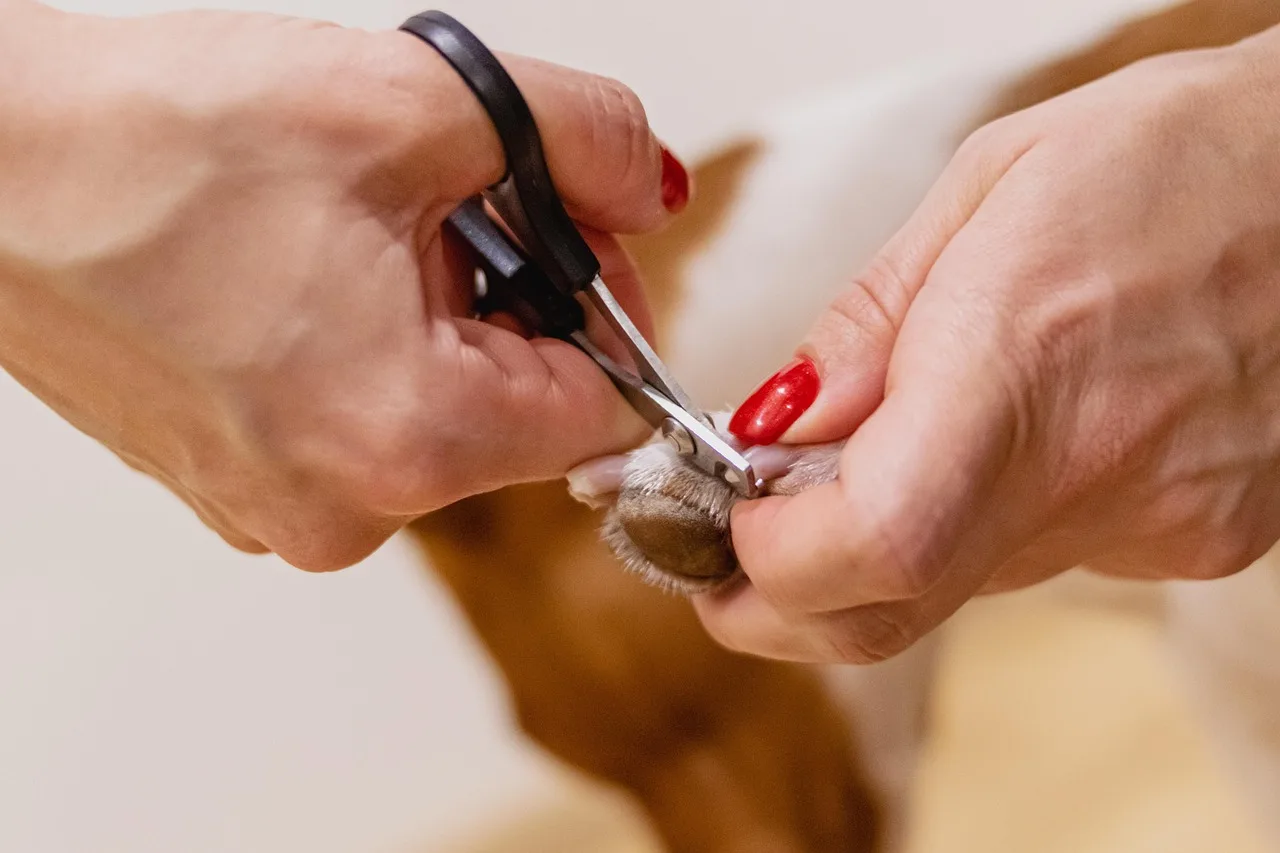
Bites and scratches are the defining hazard. Cut-resistant sleeves, gauntlets and bite gloves belong in the salon, sized to the individual.
Chemical protection comes second. Nitrile gloves for dye work, a smock for bathing and splash goggles for mixing disinfectant cover most of it.
Footwear matters more than owners expect. Closed-toe, non-slip shoes on wet tile prevent the falls that produce back injuries and wrist fractures.
Hearing protection is worth a look in a room running several high-velocity dryers at once. Noise is a recognized hazard, and stacked dryers can push exposure toward the level where protection is warranted.
Fit, cleaning and replacement
A bite glove that is too large slides off during a struggle. A face shield left smeared with shampoo residue gets abandoned by staff.
Set a replacement schedule. Gloves tear, goggles scratch, aprons absorb chemical. Assign one person to check shared equipment weekly and log it.
Making the rule stick
Train staff on when PPE is required, how to put it on and take it off, what it cannot protect against, and how to clean it. Retrain when the equipment or the task changes.
Enforcement starts at the top. An owner who skips gloves during a dye service is telling the staff the rule is optional.
Bloodborne pathogens and what happens after a bite
OSHA's bloodborne pathogens standard covers occupational exposure to blood and other potentially infectious material.
Grooming salons rarely think of themselves as exposed. They are. A clipped quick bleeds. Ear cleaning can draw blood. So can anal gland expression. Designate anyone to give first aid and the standard applies to that person directly.
The written exposure control plan
The plan lists job classifications with exposure risk, the tasks that create exposure, and the controls you use. Review it annually and whenever the task list changes.
Include the review schedule, the method for evaluating an exposure incident, and the post-exposure procedure. A dental office template will not survive scrutiny.
Universal precautions and sharps
Treat all blood and body fluids as infectious. Gloves for any procedure that might bleed, plus a face shield when splashing is possible.
Used blades, scissors and scalpel-style tools go into a puncture-resistant container. Not a drawer, not a trash bag.
After an exposure
- Wash the exposed area with soap and water, or flush mucous membranes with water.
- Report the incident to the designated person the same day and enter it in the exposure log.
- Offer the employee a confidential medical evaluation at no cost, with a licensed healthcare provider.
- Give the evaluating provider the standard and the exposure details.
- Keep the medical record confidential and separate from the personnel file.
Labels and annual training
Containers holding blood or contaminated waste carry the biohazard label. Train at hire and annually after that, covering transmission, controls and the post-exposure steps.
This is where the injury response has to be written into how work flows through the salon: who stops the service, who cleans the station, who drives the employee to the clinic.
First aid supplies and eyewash access
OSHA's medical services and first aid standard requires medical personnel available for advice, and a trained first aid provider on site when no clinic is nearby.
In practice, every salon needs one person per shift trained in first aid and CPR. The American Red Cross and similar providers run short courses that satisfy it.
What the kit holds
- Absorbent gauze and rolled bandages in several sizes
- Adhesive bandages and tape
- Antiseptic wipes and wound cleanser
- Disposable nitrile gloves in multiple sizes
- Sterile saline or eye wash for flushing
- Instant cold packs
- Emergency contact list and incident report forms
Check the kit monthly. Restock what was used and discard anything expired.
Eyewash placement
Where staff handle corrosive chemicals, OSHA expects quick drenching or flushing facilities within the work area. A plumbed station is ideal. A portable saline unit is often what a small salon can install.
Put it by the chemical mixing area, not in a locked closet down the hall. If a groomer cannot reach it in seconds, it does not count.
Records that pay for themselves
Write an incident report for every injury: bites, scratches, chemical splashes, slips. Note the time, the task, the body part and the treatment given.
Those reports feed your OSHA 300 log if you keep one, and they support workers' compensation claims. Carriers price insurance for a pet grooming business partly on loss history.
Heat, dryers and strain in the grooming room
Groomers stand for hours, lean over tubs, lift dogs that can top forty pounds, and work in a room that runs warm and humid.
OSHA has no standalone heat illness standard. The general duty clause covers heat as a recognized hazard, which means water, rest and shade, plus a slow build for new hires working their first summer.
Moving air and damp heat
High-velocity dryers push warm, damp air into a small room. Without exhaust, the space climbs above the outdoor temperature.
Install exhaust fans or a dedicated dryer vent, run the air conditioning, and schedule breaks away from the dryers. Keep cool water at the station, not only in the break room.
Watch for headache, dizziness, nausea, heavy sweating or confusion. Anyone showing those symptoms stops working and cools down.
Table and tub ergonomics
Raise the tub or lower the floor so a bather is not bent at the waist all shift. Adjustable and hydraulic lift tables cost money and save the backs that end grooming careers.
Anti-fatigue mats at every station, a stool for seated work and shears with ergonomic handles all help. Rotate tasks so no one clips nails for four straight hours.
Lifting a dog that does not want to be lifted
Lift with the legs, keep the dog close, and get help with large or thrashing animals. A two-person lift costs less than a workers' compensation claim.
Train staff on low-stress handling and restraint. It cuts bites, and it cuts the wrestling that produces shoulder and wrist injuries.
State Plan states, the poster and the reporting clock
Federal OSHA covers private employers in most states. About half run their own approved programs. The State Plans directory shows which states enforce their own rules and which cover public employees only.
California, Washington, Oregon and Kentucky run comprehensive State Plans, as do Michigan, Nevada and Utah. Texas, Florida and Georgia fall under federal OSHA for private employers.
What changes under a State Plan
A State Plan must be at least as effective as federal OSHA, and it may be stricter. California's heat rules and Washington's ergonomics attention go beyond the federal floor.
Inspections, citations and consultation come from the state agency. Your poster, reporting deadlines and training rules can all differ.
Multi-state operators should not assume one set of what inspectors expect applies everywhere. Build a state-specific addendum for each location.
The poster on the wall
The OSHA workplace poster, "Job Safety and Health: It's the Law," must hang where employees see it. It is free from OSHA and from State Plan agencies, and it explains the right to report hazards and request an inspection.
A State Plan state issues its own version. The federal poster in a California or Washington salon is not sufficient.
Reporting and the 300 log
Report a fatality within eight hours. Report an inpatient hospitalization, amputation or loss of an eye within twenty-four hours.
Salons with more than ten employees in the prior calendar year keep the OSHA 300 log and post the 300A summary from February 1 through April 30. Smaller salons are partly exempt from routine recordkeeping and still must report severe injuries.
Common questions
Does OSHA apply to a salon with three employees?
Yes. One employee brings the business under OSHA or a State Plan agency. The small-employer recordkeeping exemption does not remove the duty to provide a safe workplace.
Do I need a written hazard communication program if I only use pet shampoo?
If any product carries a hazard warning, yes. Many professional shampoos, conditioners and disinfectants do, so most salons need a written program, an inventory and accessible safety data sheets.
Who pays for bite gloves and goggles?
The employer, under the 1910.132 PPE rule. Employees may only be asked to pay for ordinary items that are not protective equipment, such as a uniform shirt.
Which poster goes on the wall in a State Plan state?
The one issued by your state agency. It carries the same employee rights information with state-specific contact details, and the federal version does not substitute for it.