Guides
How to start pet grooming business: five phases
How to start pet grooming business in five phases: choose the format and room, ask licensing authorities, build the wet end, rehearse, then open the book.
What to take away
- Five phases, run in order, each closing with a test that either passes or sends you back a phase.
- Nothing is bought in phase one, because the room and the format decide what the equipment has to be.
- Authorities are asked before the lease is signed, since the answer can rule out a building.
- The wet end and the drying stations are built before the front counter, the sign or the booking page.
- Strangers are booked last, after the salon has finished dogs whose coats and behavior were already known.
How to start pet grooming business runs in five ordered phases for a reason. New owners usually start at the wrong end: they price the service, print the sign, and only then discover that the room can dry one dog at a time. Each phase below closes with a check you either pass or repeat.
Phase one: settle the format and the room
Decide whether the business is a home salon, a storefront, a mobile unit, or a chair rented inside somebody else's premises. Then draw the room as stations rather than as furniture: tub, each drying position, each table, and the holding space where a finished dog waits for collection.
Draw the room as stations
- Tub station marked
- Each drying position marked
- Each grooming table marked
- Holding space for finished dogs marked
- Two dogs shown, no station shared
The test that closes this phase is a drawing showing two dogs in the building at once with no station shared. If you cannot draw it, the format is wrong or the room is too small, and no later decision compensates.
Phase two: ask the authorities before signing anything
Grooming rules are local: some states issue a facility license and not a groomer license, some issue neither, and municipalities add their own conditions on wastewater, kennel use or a kennel permit, signage, and change-of-use approval. Ask, in writing, before committing to a building. The offices to contact are the city or county business license office, the state department of revenue, the municipal planning or zoning department, and, for premises that will house animals, the county animal control or state department of agriculture. If the salon discharges wash water to the sewer, ask the municipal sewer authority whether a discharge permit or pretreatment approval applies.
Ask authorities in writing
- Ask state which registrations apply
- Ask municipality about zoning and change of use
- Ask about trade waste and waste water
- Ask if holding a dog differs from grooming
- Record who answered, when, and reference
The Small Business Administration planning guide covers entity and registration, and the Internal Revenue Service page on starting a business and its tax duties covers what follows. On the federal side, that includes the employer identification number, or EIN. At state level, the secretary of state handles entity registration for a limited liability company, and the department of revenue issues the sales tax permit if grooming services are taxable. Neither replaces the offices named above on the premises itself, and the licensing and compliance guide sets out how to keep those answers on file.
Before the first paying dog, arrange general liability insurance and, if you will handle animals, care, custody and control coverage. The policy limit and the premium are set by the insurer after it sees the room, the services and the number of dogs on site.
The test here is a written answer, from a named office, for the exact address.
Phase three: build the wet end first
Water in, water out, and dogs dry. Those three decide the working day, and the drying station is the one that cannot be added cheaply once the room is finished.
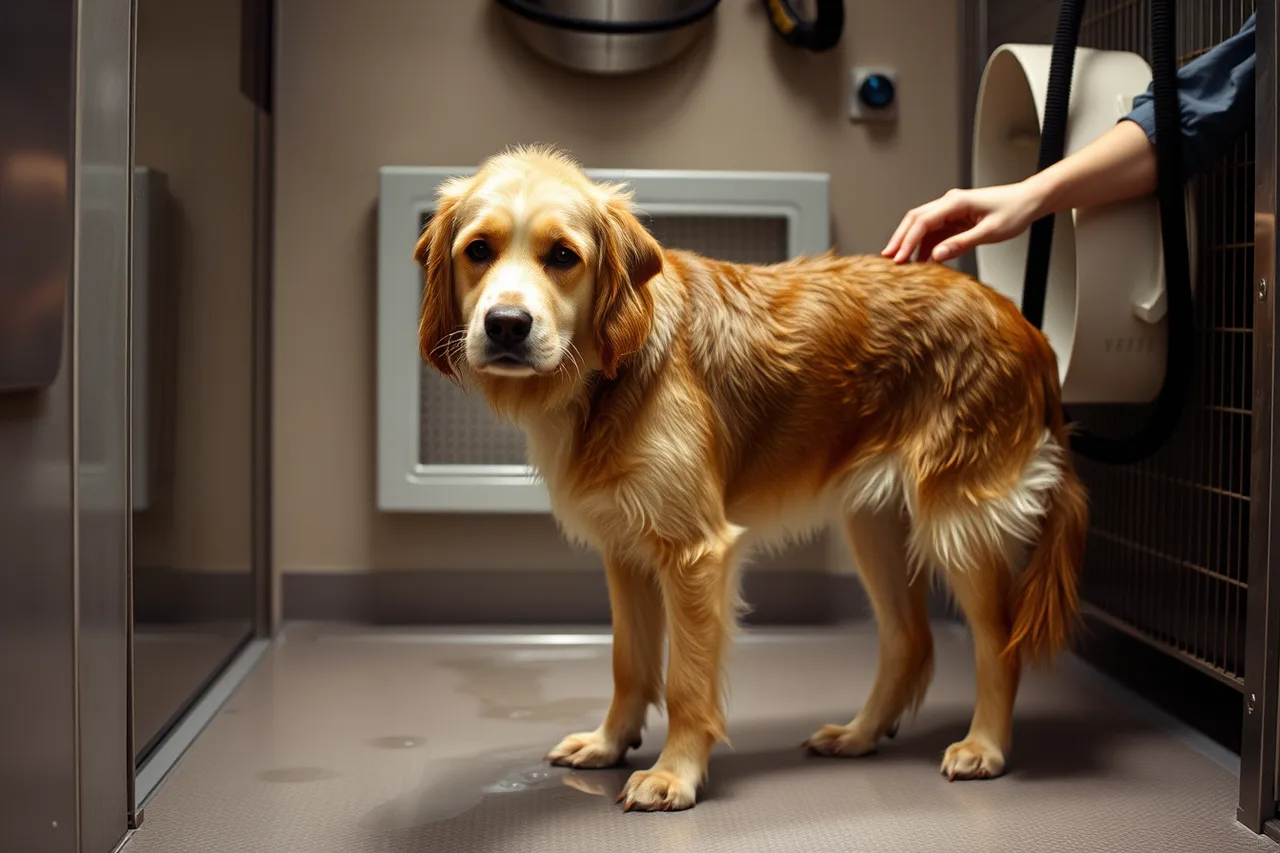
- Tub, hose and drainage installed and tested with the water volume a heavy coat actually needs
- Drying positions counted, sited, and checked for noise and heat at the height a dog stands
- Grooming table at a height the groomer can work at for a full day without stooping
- Restraint, non slip surface and a second point of attachment on every table
- Blade and clipper maintenance kit, with somewhere clean to put a hot blade down
Only after this does anything cosmetic get bought. The equipment and setup guide explains why the drying capacity is the choice that most often gets made twice.
Phase four: rehearse on dogs you already know
Book friends, family and their dogs before booking the public. Choose animals whose coat and temperament are known, and deliberately include the coat you are least confident with.
Time each stage separately: intake, bath, dry, table, finish, collection. With the owner's agreement, photograph every dog at intake and collection, and keep both. That pair settles a later disagreement, and the habit is easier to build now than under pressure.
If a rehearsal dog shows anything on the skin, ears, feet or eyes you cannot account for, stop and note it, then tell the owner to see a veterinarian. A groomer records; a veterinarian assesses.
The test is a stage by stage timing sheet for at least one dog of every coat type you plan to accept.
Phase five: open the book to strangers
Now the public. Publish the hours you can actually staff, the coats you accept, and the conditions under which you will stop work and call the owner. Take deposits or hold card details if your no show rate makes it necessary, and say so at booking rather than afterwards.
Set the first menu prices from the timing sheet rather than from a competitor's sign. Add the product cost and the hourly cost of the room to the minutes each stage takes, then compare with the published prices of local salons.
Start narrow. One coat type you are fast at, one appointment length, one drying method. Grow the menu when the timing sheet says the day has room.
When you write a first job advertisement, the Bureau of Labor Statistics page on animal care and service occupations describes the role plainly, and the hiring and training guide covers what follows. Demand building comes next, in the marketing and growth guide. A second location belongs much later, in the expansion and market guide.
Common questions
Can the phases overlap to open sooner?
Two can. Phase one and phase two run together, because the authority's answer often changes the room. Phases three, four and five should not, since each is the test of the one before it, and skipping a test only moves the failure to a week where paying customers are present.
What if the authority gives an unclear answer?
Ask again in writing, naming the address and the activity in plain words, and keep both the question and the reply. An unclear answer that is on file is worth more than a confident answer from a peer, because the file is what you produce if the activity is later questioned.
How long should the rehearsal phase run?
Long enough to have timed every coat type on the menu at least once, and to have repeated the coat you are slowest with. Counting weeks is the wrong measure. Counting completed timing sheets is the right one.
What should not be bought in the first year?
Anything that speeds up a stage that is not your bottleneck. Owners buy a second set of hand tools while still drying one dog at a time. Find the station where dogs wait, and spend there or not at all.