Guides
Pet grooming referral program: pickup workflow
A pet grooming referral program can focus on pickup-time asks, capacity checks, a next-groom credit, and recording referral details in the client file.
What to take away
- The referral moment is pickup, while the owner is looking at the finished dog and the groomer is still standing there.
- Ask for a name, not a share. "Who else has a doodle you would send me?" gets an answer; "tell your friends" does not.
- A referral that books into a full week is a no-show waiting to happen. Check capacity before you ask.
- Reward the referrer with a credit against their next groom rather than cash or a discount for the new client.
- Track who referred whom in the client record, or you will credit the wrong person and lose the habit.
Referral sources and timing
A pet grooming referral program can use the dog as its introduction. A finished groom is visible to every neighbor, dog walker and vet tech who sees that animal in the following week, and the owner gets asked about it. Your job is to make sure the owner has your name ready when the question comes.
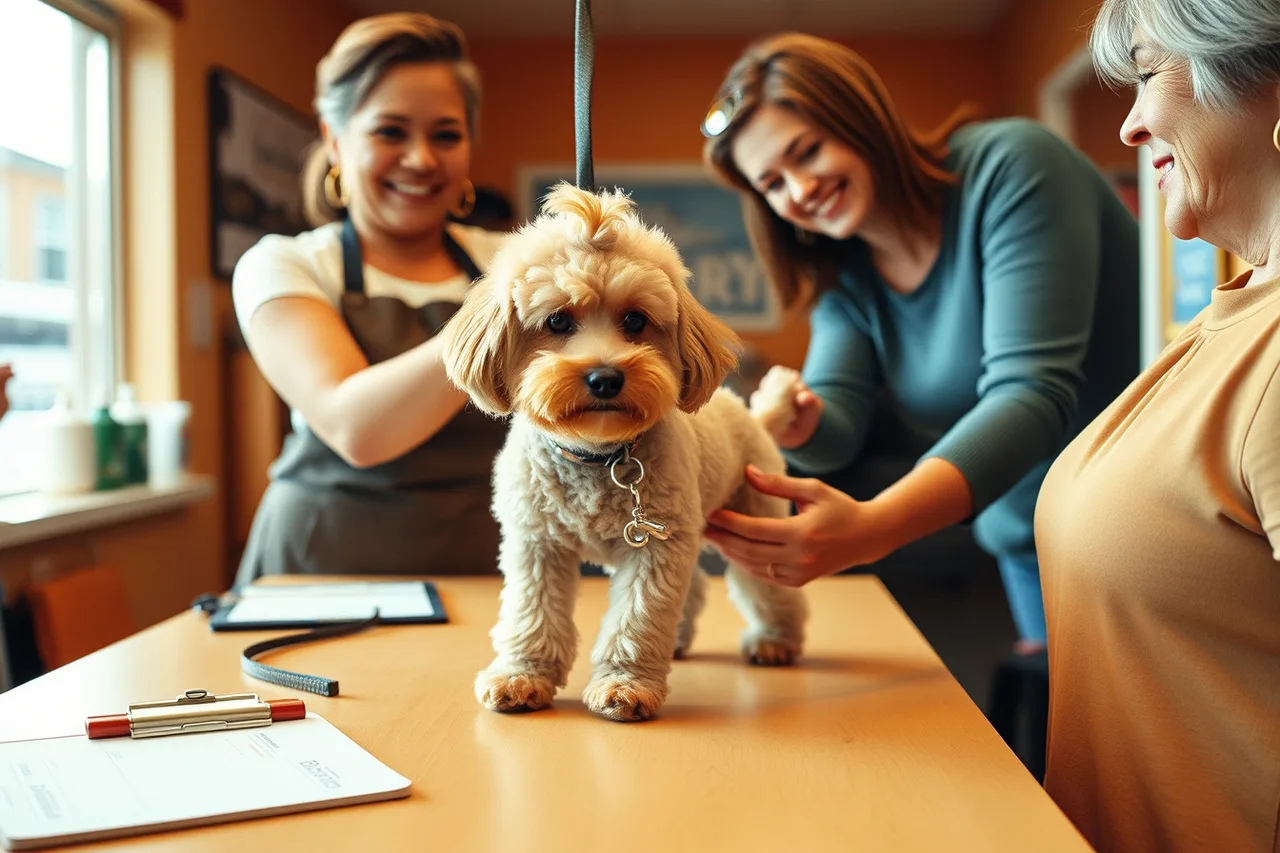
That means the ask has to land at the right moment. Not at drop-off, when the owner is late for work and the dog is pulling. At pickup, when the dog is dry, the topknot is set, and the owner is pleased. That is a thirty-second window and it is the whole program.
Ask for one specific person. A vague request produces a vague intention. "Do you know another doodle owner who struggles with matting?" produces a name, because the owner is picturing an actual neighbor. Write the name down in front of them.
Choose a consistent reward format
A credit on the next groom is one way to reward a referral, and it brings the referrer back rather than paying them out. Cash feels transactional and invites gaming. A percentage off a future visit keeps the relationship inside your book.
Set the amount once and hold it. If you change the credit when you are quiet, regulars learn to wait for the quiet weeks. Put the terms on the intake form so nobody has to remember them at the counter.
Some salons credit the new client instead. That is weaker. The new client has no reason to return yet, and the referrer, who already trusts you, gets nothing for the effort.
Capacity decides how hard you push
A referral program run at a fully booked salon produces angry new clients and a wrecked schedule. Before you ask anyone for a name, know which weeks have room and which coat types you can absorb.
Use the markets analysis to understand local demand, then limit referral asks to the weeks and coat types your salon can absorb.
Works when
- Owner to owner at pickup
- The groom is visibly good and the ask is specific
- Veterinary front desk
- The clinic trusts your handling and your hours
- Neighborhood dog walker
- They see every dog on the block daily
- Breeder or rescue group
- New owners need a first groom within weeks
Breaks when
- Owner to owner at pickup
- Nobody asks, or the ask is generic
- Veterinary front desk
- The clinic feels used and gets nothing back
- Neighborhood dog walker
- You never acknowledge the introduction
- Breeder or rescue group
- You cannot fit a puppy visit soon
Keeping the record straight
Log the referral in the client file the day it happens: who sent them, what credit is owed, and when it expires. Without that line, credits get argued about at the counter and the referrer stops bothering. Tracking referral credits in your client file works best when your pet grooming software handles the notes automatically.
Ask new clients at intake how they found you, and write the answer in their own words. "My neighbor Dana" is a name you can credit. "Online" tells you nothing.
Common questions
Should I offer a bigger reward for a first-time client?
No. A larger credit attracts one-off bargain hunters and trains your regulars to expect it. Keep the credit modest and consistent, and let the finished groom do the persuading.
What if the referred client no-shows?
The referrer keeps the credit only after the new client completes a paid groom. Say this at the counter when you take the name, so the rule is clear before it matters.
Can I ask for referrals by text after the appointment?
A text can serve as a reminder for people who left without being asked, but it loses the dog. It arrives hours later, when the owner is no longer looking at the groom. Use text as a follow-up, not a substitute for asking at pickup.
Do review requests count as referrals?
Review requests are a different job. Ask genuine clients without filtering for the happiest ones. The FTC's Endorsement Guides (16 CFR Part 255) address disclosure of material connections, and the FTC's Consumer Reviews and Testimonials Rule (16 CFR Part 465) prohibits incentives conditioned on a particular sentiment. Keep your Google Business Profile complete and current so the people you refer can find you.
The basic sequence is to ask at pickup, check capacity, record who referred whom, and apply the credit after the new client completes a paid groom.