Guides
Pet Grooming Tax Deductions: Common Costs and Records
A pet grooming tax deductions list covering supplies, equipment, rent, wages, insurance, mileage and startup costs, plus the records that support each one.
What to take away
- This pet grooming tax deductions list covers common salon expenses, from supplies and equipment to wages, insurance, advertising and professional services.
- The table gives illustrative annual ranges by category, not a national average.
- Mobile groomers can use the IRS standard mileage rate, which changes each year, or actual vehicle expenses.
- Sales tax paid on business supplies is part of their cost; track sales tax collected from customers separately from income.
- Keep receipts, a mileage log and a separate business bank account. The IRS generally expects records for at least three years after you file.
Common grooming business expenses
A pet grooming tax deductions list can start with the categories the Internal Revenue Service recognizes. IRS Publication 535 explains that a deductible business expense must be both ordinary and necessary for your grooming salon. Whether a particular expense qualifies depends on its business purpose and records.
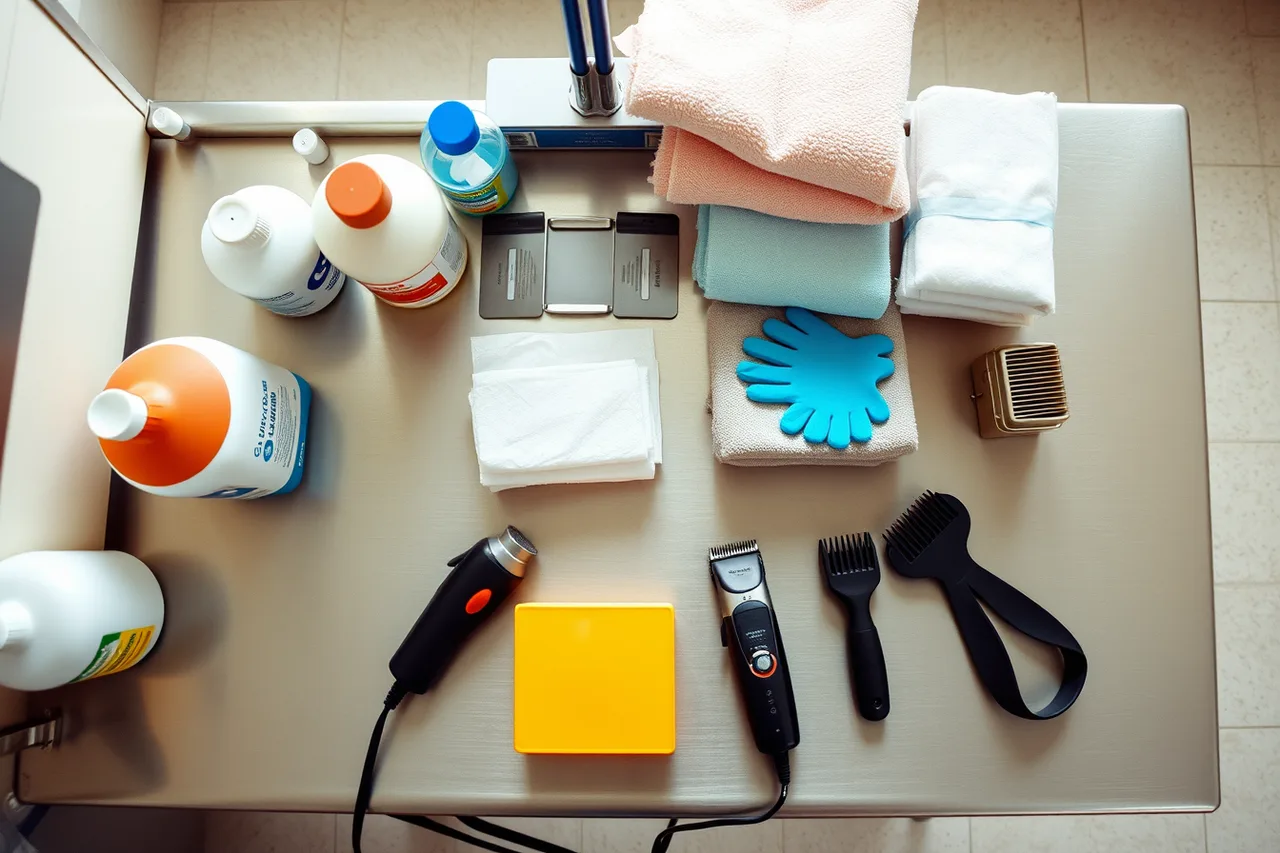
These common categories apply to many salons and self-employed groomers; they are not a complete inventory of every possible business expense.
- Suppliesshampoos, conditioners, clipper blades, ear cleaner, towels, and disposable gloves.
- Equipmentdryers, tubs, grooming tables, clippers, cages, and software you use for booking.
- Occupancystorefront rent, utilities, and a home-office share if you meet the exclusive and regular use test.
- Insurancegeneral liability, professional liability, and business property coverage.
- Vehicle usemobile grooming vans, trips to suppliers, or travel between client locations.
- Professional servicesaccountant, bookkeeper, and tax preparation fees.
That list is not exhaustive. IRS Publication 334 covers small business deductions for salon equipment, supplies, and home office expenses, and it is worth keeping on your desk during filing season.
For a self-employed groomer, Schedule C is the form used to report business income and expenses.
Other costs groomers often miss
Several ordinary salon costs sit outside the six categories above, and they add up quickly.
- Wages and payroll taxes. Pay to bathers, groomers and front-desk staff is deductible, as is the employer share of payroll taxes. See pet grooming payroll for commission and tips.
- Contract labor. Payments to an independent contractor are deductible, and the IRS requires Form 1099-NEC once payments to one person reach its reporting threshold.
- Advertising and card processing fees. Signs, a website, online ads and the percentage your processor keeps on each card payment are business expenses.
- Licences, permits, dues and training. Local licences, permit fees, association dues and courses that improve skills you already use can qualify.
- Uniforms, laundry and water. Aprons and smocks qualify when unsuitable for everyday wear; towel laundering and water bills are running costs.
Line item ranges for a grooming salon
This table uses illustrative ranges for a small storefront salon with one groomer. They are low-to-high annual figures, not a single national average. A sole owner working from a home studio will fall near the low end; a two-person commercial salon will run higher.
| Deduction category | Typical annual range (US dollars) | Notes |
|---|---|---|
| Supplies | $2,000 to $7,500 | Blades, shampoos, towels, and disposables grow with grooming volume. |
| Equipment | $1,200 to $9,000 | Dryers and tables are big one-time buys; Section 179 can expense some equipment in year one. |
| Rent or home office | $3,000 to $36,000 | Commercial rent is the largest driver; home office uses the simplified or regular method. |
| Insurance | $400 to $2,800 | Liability and property coverage cost more when you offer aggressive dog grooming. |
| Vehicle mileage | $900 to $6,500 | At the 2025 IRS rate of 70 cents per mile, 1,300 to 9,300 miles maps to this range. |
| Professional services | $300 to $3,000 | Accountant, bookkeeper, and tax preparation fees are deductible. |
These figures are illustrative, not a national benchmark quote. For equipment, you can expense the cost in the year you buy it under Section 179 instead of depreciating over several years.
For vehicles, you either use the standard mileage rate or actual expenses, not both for the same vehicle in most cases. The IRS standard mileage rate for 2025 was 70 cents per business mile, covering depreciation, maintenance, and insurance for business use of a car or van. The IRS sets a new rate each year, so check irs.gov for the current one.
Home office and startup costs
The simplified home office method lets you deduct $5 per square foot of the space used regularly and exclusively for business, up to 300 square feet. That caps the deduction at $1,500 a year.
Startup costs are the money spent before the salon opens, such as initial supplies, legal fees and pre-opening advertising. Under Section 195 you can generally deduct up to $5,000 of them in the first year. The allowance shrinks once total startup costs pass $50,000, and the rest is spread over 180 months. Publication 535 has the rules.
Two cost drivers that change the number
Two drivers move these ranges more than any other line.
- Commercial rent or a home office share. A storefront lease in a metro area can push occupancy to the top of the table; a dedicated home studio room can keep it near the bottom.
- Mobile grooming mileage. If you drive to clients, every additional 1,000 business miles adds $700 at the 2025 rate of 70 cents. Keeping a separate mileage log is the only way to claim the full amount.
Records that support each deduction
The IRS can ask you to show what you bought, what you paid and why it was a business cost. Keep the same four things for every expense.
- Proof of paymenta receipt, invoice, or bank or card statement showing the amount, date and seller.
- Proof of purposea note saying what the item was for, especially for mixed-use items.
- A mileage logthe date, destination, business purpose and miles of every trip, kept as it happens.
- Payroll and contractor filespay records, tax filings, and any Form 1099-NEC you issued.
Run every salon payment through a separate business bank account. It lets you match each bank line to a receipt and keeps personal spending out of your deductions.
How long to keep records
The IRS says to keep records until the period for assessing tax runs out. For most returns, that is three years from the date you filed. Some cases need longer, such as six years if you left out more than 25 percent of the gross income on your return.
Keep equipment records until you sell the item, plus the standard period, to work out your basis. IRS Publication 583 covers records for a new business.
Sales tax records and business expenses
Sales tax collected from grooming customers should be tracked separately from salon income. State and local rules differ on whether grooming services are taxable, so check with your state tax authority.
Do not report collected sales tax as income. The tax you collect belongs to the state, not to your salon. Sales tax you pay on business supplies is part of the cost of those supplies, and the IRS lets you deduct that cost as a business expense. The IRS page on deducting business expenses gives the federal rule for that treatment.
A bookkeeping system with a separate sales tax liability account can help prevent collected tax from being counted as salon revenue. For setting up that system, read what to record per appointment.
Common questions
Which IRS form does a self employed groomer use for grooming business write offs?
A self employed groomer reports income and expenses on Schedule C, Profit or Loss From Business. The net profit from that schedule flows to Form 1040 and is subject to self employment tax.
Can I deduct grooming supplies I bought before opening the salon?
Yes. Supplies and equipment purchased before opening can be deductible startup expenses, subject to the Section 195 limit described above. You can also deduct supplies bought after opening in the year you use them.
Does the standard mileage rate cover parking and tolls?
No. The standard rate covers vehicle operating costs, but business parking fees and tolls are deductible separately. Keep separate receipts for those.
Are state sales tax payments I make on salon purchases deductible?
The sales tax you pay on business purchases is part of the item's cost. If the item is a deductible business expense, that cost is deductible. Sales tax you collect from customers is not income and is not deducted as an expense.