Guides
Pet grooming marketing: a practical salon workflow
Pet grooming marketing can use grooming photos, rebooking, an accurate Google Business Profile, and honest review requests to build local visibility.
What to take away
- The cheapest marketing asset a salon owns is the before-and-after photograph taken at its own table, with the owner's written permission.
- Book the next appointment before the dog leaves the tub room; a rebooking rate is a marketing number, not a reception number.
- One accurate Google Business Profile beats five thin service pages written for towns you do not serve.
- Reviews come from every completed groom, not from the customers you expect to be pleased.
- Never advertise a service, a duration or a result the room cannot deliver that week.
Pet grooming marketing is mostly a question of using what the table already produces. Every groom generates a photograph, a coat assessment, a duration and a note about how the dog behaved. Those four things are the raw material. A salon that throws them away pays for advertising instead.
Photographs are the product
A prospective customer cannot judge a groom from a paragraph. They judge it from a picture of a dog that looks like theirs.
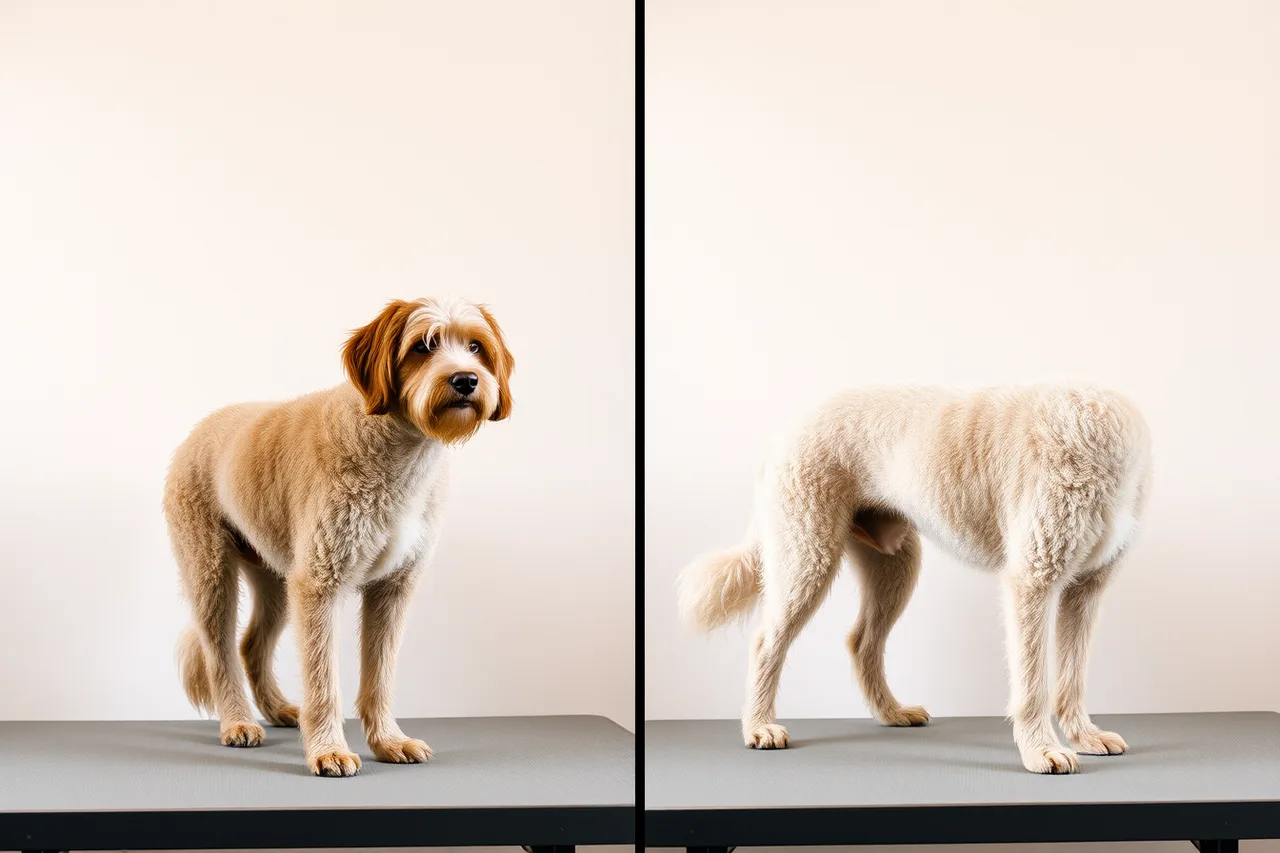
Set the camera in one place. Same wall, same light, same distance for every dog. Two shots at intake, two at pickup, and the difference between them is the entire advertisement. A matted double coat coming in and a blown, brushed-out coat going home does more than any claim about skill.
Get permission in writing at the first visit, on the intake form, with a line the owner signs. State where the pictures will appear and how to withdraw consent later. A salon that posts a dog whose owner said no has a complaint it cannot argue its way out of.
Keep the intake photograph even when you never post it. It is the record of the coat condition the dog arrived in, and it settles most disputes about what the groomer did or did not do.
The rebooking habit
The cheapest booking is the one made before the customer reaches the parking lot.
At pickup, say what the coat needs next and when. A curly coat on a six-week cycle, a double coat before shedding season, a wire coat on its hand-stripping interval. Then book it.
Track one number: the share of completed grooms that leave with a next appointment. Split it by coat family, because a smooth-coated dog on a bath-and-nails cycle behaves differently from a matted doodle. If the number drops, the cause is usually in the room, not in the advertising.
The profile that does the local work
A Google Business Profile is free and it is where most local searches end. Fill in the real name, the service area, the phone, the hours, and the booking path. Keep them current through holidays and closures.
Then stop. One profile with accurate hours outperforms a page for every suburb you have never driven to. Thin pages written for towns outside your service area bring inquiries you will decline, and declining them costs reception time.
Category choice matters more than page count. Pick the categories that describe what the salon actually does, and let the photographs carry the rest.
Reviews, asked for honestly
Ask every customer after a completed groom, not the ones you expect to be pleased. Selective asking is the practice the Federal Trade Commission's guide to soliciting and paying for online reviews addresses directly, and it is the one that turns a review page into a misleading document.
Do not gate, do not discount in exchange for a rating, and do not write the review yourself. Answer the bad ones without naming the animal's condition or the owner. The advertising guidance for small businesses sets the same standard for anything the salon claims about its own work.
A one-star review that says the groom took four hours is useful. It tells the next customer what a matted coat costs in time.
A practical marketing sequence
- Photograph every groom at intake and pickup, with signed permission.
- Fill in the Google Business Profile completely and keep the hours true.
- Ask every customer for a review after the service, with no incentive.
- Book the next appointment at pickup and record whether it happened.
- Only then consider paid placement, and only for services the room can carry.
Each step costs time rather than money, and each one feeds the next. The photographs make the profile worth reading. The profile makes the review page credible. The rebooking rate tells you whether any of it worked.
What not to advertise
Do not advertise a duration the coat does not allow. A doodle in full coat is not a ninety-minute appointment, and promising one teaches the customer to distrust every other number the salon gives.
Do not advertise services the salon does not perform, or conditions it will not handle. Where a dog's skin, ears or behavior sit closer to animal health than to grooming, the salon refers the owner to a veterinarian and records what it saw.
Whether a groomer may perform a given task varies by state and municipality, and several states require no license at all. Confirm with your state and municipal authority before putting anything of the kind on a service page.
Do not advertise a price you intend to change at the door. State the basis instead: coat condition, size, and the time the work takes.
Common questions
How often should the profile be updated?
Hours and closures need updating the day they change. Photographs and service descriptions can be reviewed monthly. A profile that shows last year's holiday hours sends customers to a locked door.
What if a customer refuses photographs?
Record the refusal on the intake form and take the pictures anyway for the file, or skip them entirely if the owner declines both. Never post a dog whose owner said no, and never trade a discount for consent.
Should the salon run paid ads at all?
Only after the free steps are working. Paid placement brings inquiries, and an inquiry the room cannot book at a fair duration costs more than the ad. Fix the rebooking rate first, then decide.
How should a bad review be answered?
Briefly, once, without naming the animal's condition or the owner's circumstances. Say what the salon does and invite the customer to call. Arguing in public reads worse than the review.